By Analyst Team · Updated 2026-08-09 · 12 min read
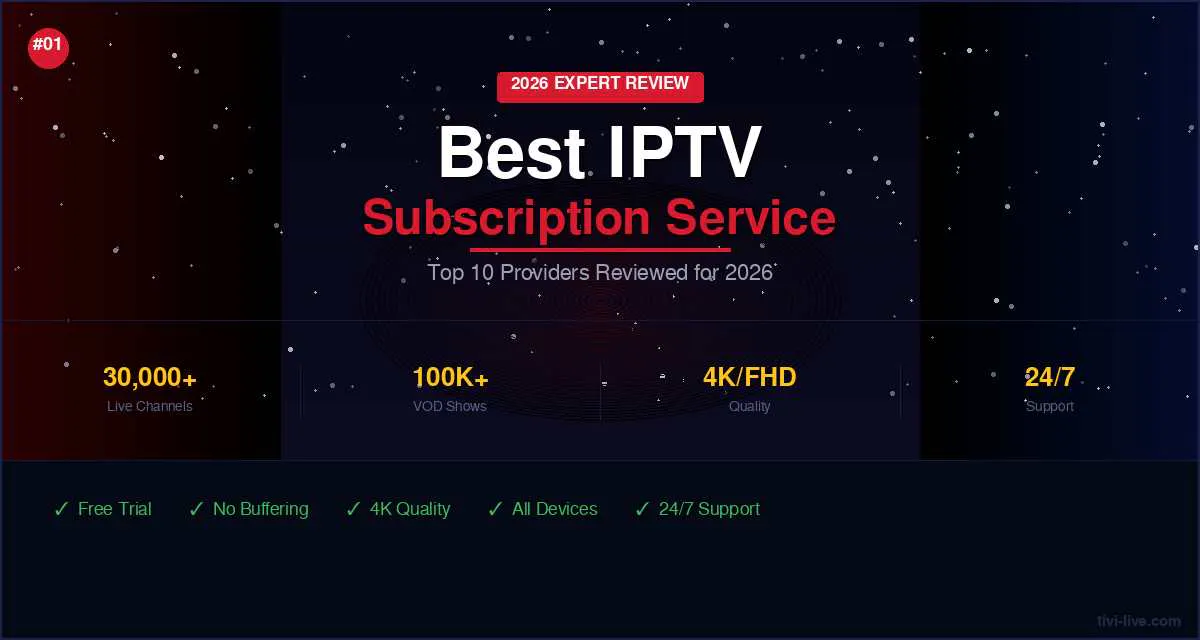
Whether you’re trying to ditch a pricey cable bill, follow every live match this season, or simply want to watch exactly what you want without being told what to watch, an iptv box deserves a spot on your shortlist. This complete guide explains what it is, how it works, what it really costs, and exactly how to set one up — so you can decide whether it’s the right move for your living room.
The rig shown in the photo above is a typical 2026 setup: a compact IPTV box connected directly to a 4K television, with live content already streaming over the internet. No dish, no cable outlet, no technician visit — just a piece of hardware and an internet connection. If you’ve ever wondered how people get those giant sports packages without paying cable-company rates, this is usually the answer.
Crushed for time? Bookmark this guide, then jump straight to the current IPTV box subscription specials to see what you can lock in before pricing changes.
LIMITED TIME AVAILABILITY
Unlock Full iptv box Access
Secure special promotional rates instantly before the window closes. Lock in your pricing model today before plans return to standard regional metrics.
What Is an IPTV Box Exactly?
An iptv box is a small set-top device that receives television signals over an internet connection using Internet Protocol. It looks like a compact media player — many are no bigger than a paperback book — and it runs an operating system, usually Android TV or a custom Linux build, with apps that play live channels, video-on-demand, and catch-up content.
The critical thing to understand is that the box itself contains no channels. It’s the software player that brings content in. Most IPTV boxes support M3U playlists and the Xtream Codes API — two standard formats that IPTV subscription providers use to deliver channel lists. The EPG (Electronic Program Guide) is loaded separately, giving you the familiar grid-style TV guide on screen.
So the full IPTV ecosystem looks like this:
- An iptv box (the hardware that decodes the streams)
- A subscription service (provider credentials that unlock the channels)
- An IPTV player app (the software interface you navigate on screen)
- A network connection (Ethernet or Wi-Fi feeding the stream)
How an IPTV Box Works Step by Step
How does a channel actually end up on your screen? Here’s the step-by-step chain that happens inside every IPTV box:
- Connect the hardware. The box plugs into an HDMI port on your TV and connects to your home router via Ethernet cable or Wi-Fi.
- Install the player app. You install an IPTV app such as TiviMate, IPTV Smarters Pro, or the app supplied by your provider.
- Enter subscription credentials. This is usually a playlist URL, a portal login, or an Xtream Codes username and password.
- Load the channel list. The app pulls the channel catalog, EPG data, and groups everything into categories like sports, movies, news, and children’s channels.
- Select and stream. When you click a channel, the player requests the live video from the provider’s server. The server streams it over the internet, and the box decodes it to your screen.
That entire process usually completes in a few seconds — most of the delay is just channel “zap” time. The quality of the stream depends more on your internet connection, the provider’s server load, and the box’s processor than any other factor. That’s why an experienced user will tell you to invest in a reliable service before you worry about premium hardware.
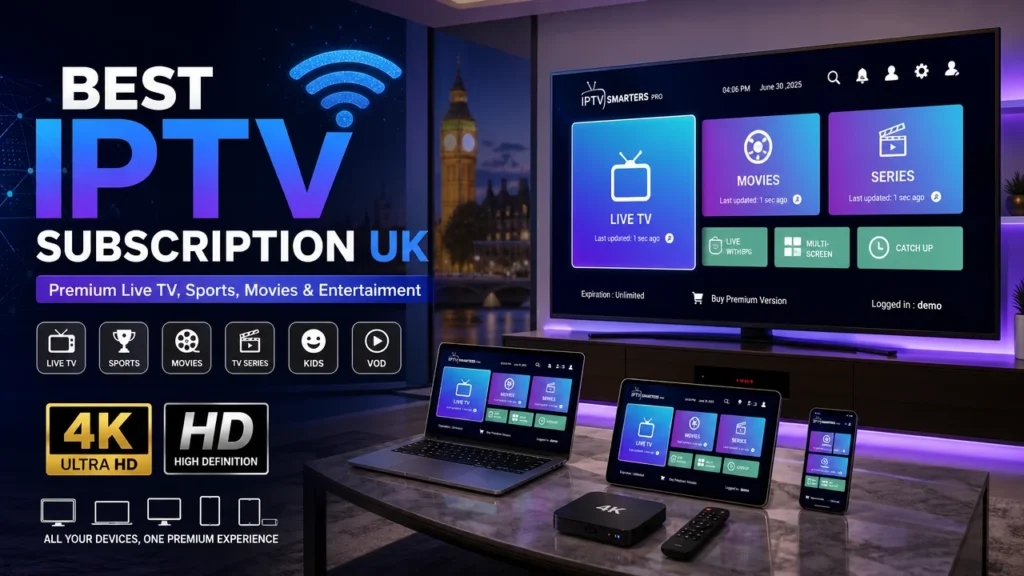
The interface above, captured from a leading 4K IPTV subscription, shows how live sports and on-demand cinema coexist in the same app. A well-designed IPTV player groups channels by category and displays a television guide, making the experience feel as polished as a premium cable service — without the premium cable price.
Quick tip: If you’re evaluating services, the best IPTV box for live sports isn’t necessarily the most expensive one — it’s the one whose subscription carries the leagues you follow.
Unlock complete high-definition information and priority access to top-rated IPTV packages.
Claim This Special Offer for iptv box →The Concrete Benefits You Can Actually Expect
Here’s what a decent IPTV box and subscription combination gives you in real-world terms:
- Thousands of channels. Most providers offer 10,000+ channels, including foreign language groups, major sports networks, and premium movie channels.
- Live sports without the cable bundle. Football, UFC, boxing, basketball, and niche sports are the most common reasons people buy an IPTV box in the first place.
- 4K and HDR support. A quality 4K IPTV box can stream Ultra High Definition content, provided your TV and internet speed can keep up.
- No lock-in contracts. Most IPTV subscriptions are prepaid month-to-month, quarterly, or yearly with no long-term commitment. That’s a huge draw for cord-cutters.
- Multi-TV coverage on one subscription. Depending on the provider, you can use the same account on multiple boxes simultaneously — a great option for bedrooms and holidays.
- App-based flexibility. Beyond the IPTV player, most boxes run Android TV apps like YouTube, Spotify, and casual games.
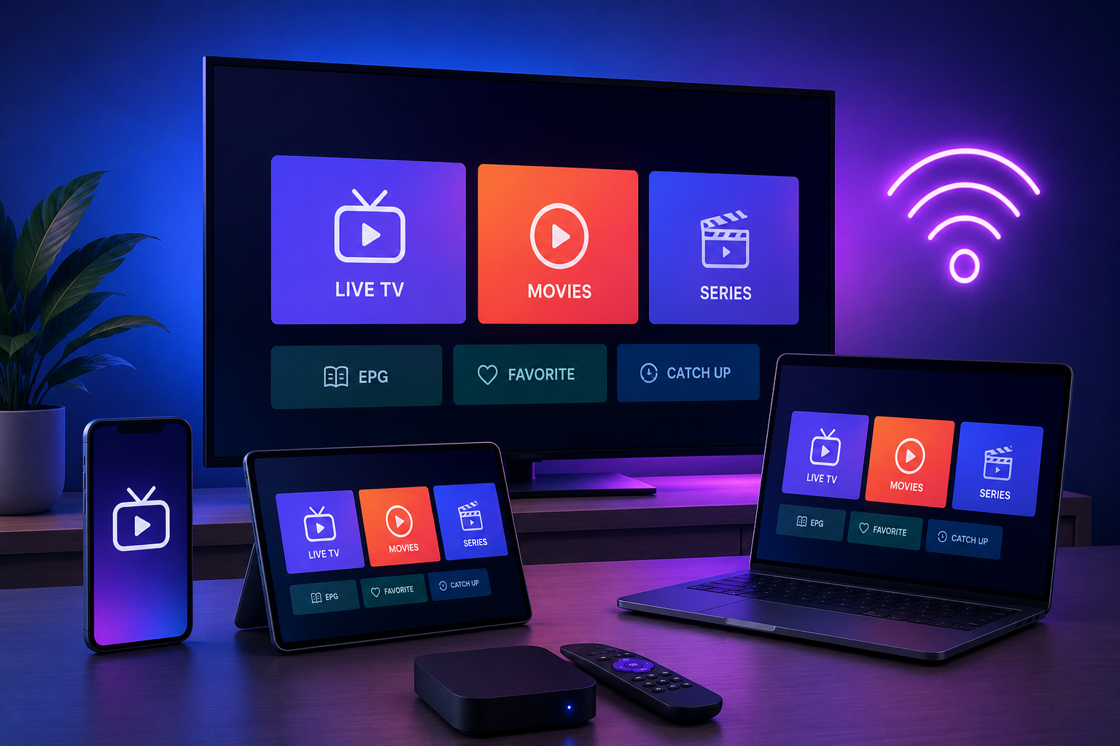
The remote control and home screen you see above are typical of what arrives in the package. A simple point-and-click remote, a friendly home menu, and an app launcher that gets you into the IPTV player in seconds. Even a cheap IPTV box with Wi-Fi has enough muscle to run the player apps and deliver HD streams, though Ethernet remains the reliability king.
Honest Limitations and What They Mean for You
Let’s be straight — no streaming technology is perfect, and IPTV boxes have their own set of trade-offs:
- Internet dependency. If your Wi-Fi hiccups, so does your TV. Streaming also consumes significant data, so check for data caps on your broadband plan.
- Legal gray areas. Some IPTV services lack broadcasting rights for the channels they carry. A service can disappear overnight, be blocked, or be shut down. A licensed provider avoids this risk entirely.
- Provider reliability varies hugely. Channel availability, uptime, and buffering differ from one provider to the next. You genuinely get what you pay for.
- ISP throttling. Some internet providers deliberately slow down IPTV traffic, which sends many users to a VPN. Ensure your chosen box supports VPN apps if you plan on using one.
- Setup curve. Entering M3U URLs, loading EPGs, and adjusting playback settings isn’t difficult, but it’s not quite like pressing “power” on a traditional TV either.
✓ Pros
- Massive channel selection at a fraction of cable price
- Flexible month-to-month subscriptions
- 4K/HDR streaming on capable hardware
- Portable — take your box anywhere
- Multiple TVs can share one subscription
✗ Cons
- Quality depends heavily on internet stability
- Unlicensed providers can vanish or block streams
- ISP throttling may require a VPN
- Less plug-and-play than a traditional cable box
- No official app-store guarantee on budget models
IPTV Box vs. Alternatives: Side-by-Side Comparison
Still wondering whether an IPTV box is the right call compared to the other devices in your drawer? Here’s an honest comparison with the most common options:
| Feature | IPTV Box | Fire Stick | Android TV Box | Cable / Satellite |
|---|---|---|---|---|
| Setup | HDMI + app | HDMI + app | HDMI + app | Technician required |
| Channel selection | 10,000+ via subscription | App-based, 100-500 depending on service | 10,000+ via subscription | 200-500, fixed by contract |
| Live sports | Excellent with right provider | Good but per-app costs add up | Excellent with right provider | Good but expensive add-ons |
| 4K support | Yes (model dependent) | Yes | Yes (model dependent) | Varies by provider |
| Upfront cost | $40–$150 | $40–$60 | $50–$200 | Often included in contract, but hidden fees later |
| Monthly cost | $10–$15 | $10–$40 (apps + subs) | $10–$15 | $60–$120 |
| Contract | None standard | Depends on apps used | None standard | 12–24 months typically |
| Ecological footprint | Lower energy than cable box | Lower energy | Lower energy | Higher energy, constant power draw |
As the table makes clear, an IPTV box wins on channel count, cost flexibility, and sports coverage. The Fire Stick is better if you already live inside Amazon’s ecosystem and rely on Alexa. A stock Android TV box is the closest sibling to an IPTV box, but it’s often missing the polished IPTV player experience and pre-configured playlist support that dedicated boxes ship with. Cable offers familiarity and reliability but charges a premium for it.
Where to buy iptv box units? Amazon, direct brand stores, and specialized streaming retailers. Avoid marketplace sellers with vague descriptions and look for one that clearly mentions which IPTV player apps are pre-installed and whether it’s certified for 4K output.
Who Is an IPTV Box For?
Not everyone needs an IPTV box, but a few profiles find it genuinely transformative:
- Cord-cutters who want a cable-like experience without a cable bill.
- Sports fans who need several live leagues without paying for a huge TV package.
- Expats and international viewers who want channels from their home country at a sensible price.
- Budget-driven families that do the math and find IPTV subscriptions far cheaper than contract TV.
- Multi-TV households that need a second or third set-top without adding a full cable line.
- Tech-curious users who enjoy the freedom to mix hardware, app, and subscription choices.
How to Get Started with Your IPTV Box
The setup process is straightforward, and almost all of it happens in the first evening. Here’s the practical sequence:
- Choose your hardware. Decide between a budget box (around $40), a mid-range model with 2-3 GB RAM (around $70-100), or a premium 4K box with Wi-Fi 6 (around $150). Your bandwidth and TV resolution should drive that decision.
- Pick a provider. Look at subscription plans, channel list, simultaneous connections, refund policy, and reviews. A one-month trial is the best way to test before committing.
- Subscribe and get credentials. Most providers send you a confirmation with an M3U playlist URL or Xtream Codes login details.
- Connect the box to your TV and internet. HDMI for display, Ethernet for the most stable stream. If Ethernet isn’t possible, connect to a Wi-Fi band with the least interference.
- Install the IPTV player. Download TiviMate, IPTV Smarters Pro, or the app recommended by your provider directly from the box’s app store.
- Enter your credentials. Paste the playlist URL or log in with your portal details.
- Let it load and browse. Once the channel groups appear, check a few live channels and look at the EPG to confirm the guide works.
- Tweak the basics. Set your preferred player buffer size, default audio track, and enable hardware decoding for smoother 4K playback.
For those wondering how to set up iptv box configurations with a VPN, install the VPN app from the store before opening the IPTV player, then connect to a server in a nearby region. This prevents ISP throttling without adding noticeable latency.
Final Subscription Window:
Get IPTV Box Offers Today →Affiliate Disclosure: Clicking this secure link verified by our network supports our team through standard partnership terms at zero extra cost to your invoice.
Frequently Asked Questions
1. Is using an IPTV box legal?
The hardware itself is completely legal — IPTV boxes are normal streaming devices sold worldwide. The legal gray zone comes from the subscription service: if the provider has proper rights to broadcast the channels, it’s legitimate. If not, you’re accessing unlicensed content. In many countries, streaming unlicensed copyrighted material can be a civil offense, although enforcement usually targets the providers rather than individual viewers. The safest path is to use a licensed IPTV provider and read the terms of the service before handing over payment.
2. What internet speed do I need for an IPTV box?
For HD streaming, a stable 10–15 Mbps is enough for one device. 4K content requires 25–50 Mbps. Since IPTV shares bandwidth with Zoom calls, game downloads, and everything else in your home, a total connection of 100 Mbps or more is recommended for busy households. Ethernet always beats Wi-Fi for stability, so if your router is near the TV, wire the box directly.
3. Can I use one IPTV box on multiple televisions?
Technically, a single box is physical hardware connected to one TV. But most IPTV subscriptions allow multiple simultaneous connections on one account. That means you can buy a separate IPTV box for each TV and connect them all to the same subscription, as long as the plan covers it. Many providers now offer two to four simultaneous connections, which makes multi-TV coverage both easy and affordable.
4. Which is the best IPTV box for live sports?
For live sports, the box itself matters less than the provider’s channel lineup, server stability on match days, and your internet connection. That said, a box with a faster processor, at least 2 GB of RAM, and 4K output will handle high-bitrate sports streams more cleanly. Pair strong hardware with a provider that lists the sports channels you follow and that has a reputation for stable weekend streaming.
5. Are IPTV subscriptions available without a contract?
Yes — in fact, that’s one of the biggest advantages over traditional TV. Most IPTV providers operate on a prepaid model: one month, three months, six months, or a year, and you walk away when you want. A no-contract IPTV box subscription let you test a service with minimal risk. Start with a single month, note the stream quality, buffering frequency, and channel availability, then decide whether to renew.
6. How do I stop IPTV buffering and freezing?
Reduce buffering by using a wired Ethernet connection, closing background apps, and lowering the stream resolution if your internet fluctuates. If the problem continues, the issue is likely the provider’s server capacity. A reliable service should handle peak evening hours without constant freezing. Chasing a cheaper provider to save a few dollars usually costs more in frustration than it saves.
7. Will a cheap IPTV box with Wi-Fi work smoothly?
A cheap IPTV box with Wi-Fi can work, but you’re stacking two potential weak links: a weak network antenna and limited processing power. Budget boxes with 1 GB RAM may struggle with heavy 4K playlists and large channel lists. If your budget is tight, look for a model with at least 2 GB of RAM and dual-band Wi-Fi. Better yet, plug in an Ethernet cable and most budget hardware limitations become far less noticeable.
8. Do I need a VPN for an IPTV box?
With a licensed IPTV service, a VPN is optional and mainly used for privacy. With unlicensed services, a VPN can be important: it hides IPTV traffic from your ISP, prevents throttling, and gives you anonymity. Just remember that not every budget box handles VPN software gracefully, and a VPN may cut your streaming speed by 10–30 percent. Choose a box with decent RAM if VPNs are part of your plan.
Conclusion: Is an IPTV Box Worth It?
By now, you should have a clear picture: an iptv box is a flexible, cost-effective alternative to cable TV, provided you pair good hardware with a reliable service. The hardware choice depends on your television, internet speed, and budget. The service choice is where you should be careful — look for a provider that is transparent about channel quality, connection limits, and support.
If you’re ready to start, comparing current subscription offers before you lock anything in pays off. Explore today’s IPTV box subscription deals to see what’s available right now and pick the package that fits the way you actually watch content.