By Analyst Team · Updated 2026-08-06 · 11 min read
Remember when switching TV providers meant booking a technician visit and signing a 24-month contract? The ip-tv provider space has completely rewritten those rules. With a modern IPTV subscription, you get live channels, sports passes, and on-demand films through the same internet connection you already pay for — often at less than half the cost of traditional cable.
But not every service that calls itself an ip-tv provider deserves your money. The market is full of unverified resellers, unstable stream feeds, and legal gray zones. That's why this guide exists. You'll learn what an IPTV provider really is, how the technology works behind the scenes, what you should expect to pay, how to separate reliable services from scams, and exactly how to set everything up in 2026.
The interface you see above — a familiar channel grid with descriptive program titles — is what a quality ip-tv provider delivers through its app. By the end of this guide, you'll know exactly what to look for and what to run away from when choosing your next subscription.
Looking for a quick, reliable recommendation?
We evaluate providers on buffering performance, channel selection, legal compliance, and customer support. Check the special offer below for one of the market's most stable options.
Browse the recommended ip-tv provider →LIMITED TIME AVAILABILITY
Unlock Full ip-tv provider Access
Unlock complete high-definition information and priority access packs. Lock in your pricing model today before plans return to standard regional metrics.
What Is an ip-tv provider Exactly?
An ip-tv provider is a company that distributes television programming through Internet Protocol (IP) networks instead of traditional terrestrial, cable, or satellite signals. IPTV stands for Internet Protocol Television, and it works on a simple principle: your broadband connection becomes the delivery channel for live television, video-on-demand (VOD) libraries, and time-shifted programming.
To make the distinction clearer, look at how each technology travels:
- Cable TV — signals travel through coaxial cables or a hybrid fiber-coaxial network, typically from a local provider.
- Satellite TV — signals bounce from a broadcasting satellite to a parabolic dish on your roof or balcony.
- Terrestrial TV — over-the-air waves are caught by an antenna.
- IPTV — video packets travel over the same internet connection you already use for browsing, streaming, and gaming.
Most legitimate ip-tv providers offer three different content models:
Live television — real-time linear channels that follow a broadcast schedule, similar to traditional TV. Video on demand — a library of films, documentaries, and series you can start whenever you want. Time-shifted and catch-up TV — programs that aired on a channel in the last few hours or days, available for replay if you missed them.
There's also an important distinction you'll encounter while researching: between legitimate, content-licensed providers and "gray market" IPTV resellers. Legal providers sign broadcasting agreements with content owners and pay royalties. Gray-market services often re-stream premium channels illegally, which is why they're so cheap. The service itself may work perfectly, but the legal risk for both the reseller and the end user is real. We'll dig deeper into this later.
How an ip-tv provider Works Step by Step
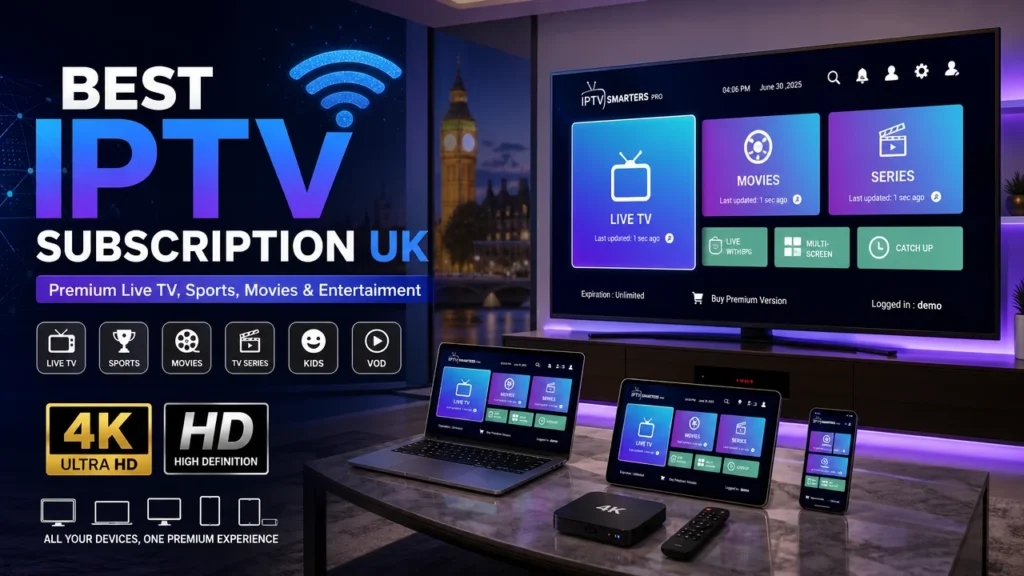
The diagram above shows the full route a channel takes from broadcast to your living room. Let's walk through each stage so you understand what's actually happening behind the scenes:
- Content acquisition. The ip-tv provider obtains programming from various sources. Legal providers license content directly from broadcasters and studios. The content may arrive via satellite uplinks, dedicated fiber feeds, or digital file delivery.
- Encoding and transcoding. Raw video is compressed using codecs like H.264 or H.265 so that it can travel efficiently over the internet. The provider often creates multiple quality versions — 720p, 1080p, 4K — and multiple bitrates so that your device can adapt to your connection speed.
- Storage and streaming servers. Live channels and VOD files are stored on high-performance servers that speak streaming protocols such as HLS (HTTP Live Streaming) or MPEG-DASH. These servers handle thousands of simultaneous viewers.
- Content delivery network (CDN). To reduce buffering, content is cached on servers in multiple cities. When you press play, the app automatically connects to the closest or fastest CDN node instead of hauling data from the other side of the world.
- Playback on your device. Finally, the stream reaches your IPTV app, where the video is decoded and displayed. Popular apps include TiviMate, IPTV Smarters Pro, and Smart IPTV, which work on Android boxes, FireStick, Smart TVs, iOS, and PC players like VLC.
The Real Benefits of Choosing an ip-tv Provider
Why are millions of households switching to an ip-tv provider in 2026? The benefits go far beyond the monthly bill.
- Massive cost reduction. A quality ip-tv provider subscription typically costs between $8 and $20 per month. Even premium legal IPTV plans rarely exceed $25, whereas cable packages commonly start at $60.
- Channel variety. You can access thousands of channels from dozens of countries in one app. International news, regional sports, and niche entertainment are no longer hidden behind expensive add-on tiers.
- Device flexibility. Watch on your smart TV, Android box, iOS phone, tablet, laptop, or even a web browser. You're not tied to one set-top box in one room.
- Built-in features. Electronic program guides (EPG), one-touch recording, catch-up TV for the last 7 days, favorite lists, and multi-screen support — these are standard in modern IPTV apps, not paid extras.
- Portability. With an IPTV subscription, you can travel abroad and still watch home-country channels as long as you have internet access.
Ready to cut the cable bill without losing the channels your family loves? The fastest way to see if IPTV works for you is to test a reputable provider with a short-term plan.
Activate Your ip-tv provider Subscription Now →Honest Limitations You Need to Know
No technology is perfect, and IPTV has a few downsides that you should acknowledge before subscribing.
You're at the mercy of your internet speed. If your broadband connection is unstable, your TV experience will be too. Most reliable providers recommend at least 25 Mbps for HD and 50 Mbps for 4K live streams. During peak evening hours, a congested Wi-Fi network can cause annoying pixelation.
Legal ambiguity is everywhere. The cheapest IPTV services are often operating without broadcasting rights. While the subscriber rarely gets prosecuted, the service can disappear overnight when the provider's infrastructure is seized. You'll lose your payment and all setup time.
Reliability varies wildly between providers. Unlike cable or satellite — which are physical and generally dependable — IPTV depends on the provider's server maintenance, bandwidth, and CDN. A slow provider will buffer even with fast home internet.
Setup requires some technical comfort. You'll need to install an app, load a playlist or portal URL, and sometimes configure EPG data. Most of the time this takes less than 15 minutes, but it's not as plug-and-play as a cable box.
Pros of IPTV
- Costs 60–80% less than cable
- Thousands of international channels
- Watch on any internet-connected device
- In-app recording and catch-up TV
- 4K / FHD quality on top providers
- Multiple connections per household
Cons of IPTV
- Needs a stable 25–50 Mbps connection
- Gray-market services carry legal risk
- Buffering depends on provider server load
- Video-on-demand catalog may be limited
- No official equipment or in-house support
- Service can end abruptly if provider is shut down
IPTV vs Cable vs Satellite vs Streaming: Comparison
To make the best decision, place an ip-tv provider side by side with the other ways people watch television. The table below covers the factors that matter most in 2026.
| Factor | IP-TV | Cable | Satellite | Streaming Services |
|---|---|---|---|---|
| Monthly cost | $8–20 | $60–120 | $60–150 | $7–23 per service |
| Channel count | 5,000–20,000 | 200–500 | 100–400 | No live channels (mostly) |
| 4K / live sports | Yes, on premium plans | Yes, but limited | Yes, requires dish alignment | Seasonal sports only |
| Internet required | Yes, 25 Mbps+ | No | No | Yes, 10–25 Mbps |
| Device flexibility | Smart TV, phone, tablet, PC | Cable box only | Satellite receiver | Smart TV, phone, tablet, PC |
| Contract lock-in | None or monthly | 12–24 months | 12–24 months | None, cancel anytime |
As the table shows, an ip-tv provider wins on cost, channel variety, and device flexibility. Cable and satellite still have an edge if your internet connection is slow or unreliable, and streaming services are better if you value award-winning original shows over live linear TV.
Who Should Pick an ip-tv Provider?
IPTV isn't for everyone, but for these four user profiles it's practically the best television investment available in 2026.
Cord-cutters. If you've already cancelled cable and are patching together Netflix, Prime, and a free streaming app, an ip-tv provider fills the gap. You'll replace linear broadcast channels — news, morning talk shows, breakout international series, live events — without paying telecom prices. The person in the image above is exactly this type of user: someone who wants live sports from another country and finds that no traditional local provider offers it.
Sports fans. IPTV packages often bundle sports channels that would cost an arm and a leg on cable or satellite. Legitimate providers in the UK, Europe, and North America frequently include premium sports as an add-on for just a few dollars extra per month. If your local cable charges $40 for a sports tier, this is a big win.
Budget-conscious households. With typical monthly savings of $50 or more, an ip-tv subscription pays for itself quickly. Many families subscribe to one legal IPTV line, add a second connection for the kids' room, and still spend less than a single standard cable package.
Expat and multilingual viewers. Missing local news and entertainment from your home country is common when abroad. An ip-tv provider offers the international package you need: French, Spanish, Arabic, Portuguese, Indian, Filipino, African, Eastern European, and dozens of others. The same subscription works when you travel, letting you keep up with both local-life and home-country content.
How to Get Started with an ip-tv Provider: 6 Practical Steps
Once you've decided IPTV is right for you, follow these steps to avoid headaches and choose a provider you can rely on.
- Test your internet speed first. Run a speed test at home. Ideally you want at least 25 Mbps down for HD and 50 Mbps for 4K. Also check your upload speed if you plan to use recording to the cloud.
- Make a must-have channel list. Write down the live channels and sports events your household actually watches. Compare this list against the packages providers offer. If a provider only shows a vague "5000 channels" without a channel list, walk away.
- Research legal standing and reputation. Search for "ip-tv provider reviews reddit," Trustpilot, and IPTV-specific forums. Legitimate providers publish contact information, terms of service, and often a physical business address. Gray-market resellers hide behind Telegram accounts and generic email addresses.
- Look for a free trial or a 24-hour test. Reputable providers offer a trial costing a few dollars or a free 24-hour test. Use this window to check buffering at peak hours, channel stability, and whether the electronic program guide (EPG) is properly synced.
- Start with the shortest subscription. Resist the urge to buy 12 months upfront. A one-month or three-month plan lets you verify reliability across several weeks of real-world use. Only after you're satisfied should you commit longer.
- Install the recommended app. Most providers support a range of apps. If you have a FireStick, Android TV, or smart TV, start there. The provider's setup page will give you either a portal URL or a playlist file, which you paste into the IPTV app. If anything seems overly complicated, that's a red flag for poor service quality.
Final Subscription Window:
Start Your Subscription Today →Affiliate Disclosure: Clicking this secure link verified by our network supports our team through standard partnership terms at zero extra cost to your invoice.
Frequently Asked Questions
What is the best ip-tv provider 2026?
The best ip-tv provider for you depends on your must-have channels and internet speed. Generally, the strongest 2026 options offer at least 10,000 channels, stable 4K sports streams, 24/7 customer support, last-7-days catch-up TV, and a free trial. Look for providers with positive ip-tv provider reviews reddit threads and a transparent company contact page before paying.
How do I choose an ip-tv provider?
Start by checking your internet speed and listed channels. Shortlist providers that offer a trial or monthly plan. Test buffering during peak evening hours and live sports events. Confirm the EPG is populated and accurate. Finally, check whether the provider is legally licensed or reselling streams without rights — if the membership price seems too good to be true, the service will likely die without notice.
Which ip-tv provider is best for sports?
For sports, focus on providers with dedicated sports sections in their channel list: football leagues, boxing pay-per-view, motorsport, tennis, rugby, basketball, and MMA. Premium providers include sports as an add-on or bundle it into their "Gold" plan. Review the channel lineup to confirm the exact leagues you follow — the UK, Italy, Spain, and Middle Eastern providers often have the most comprehensive football coverage.
What is the cheapest ip-tv subscription?
You generally get what you pay for, but budget options start at around $5–8 per month for a single connection in 2026. The cheapest ip-tv subscription plans often lack EPG support, catch-up TV, and stable servers. A better middle ground is paying $10–15 per month for an established provider with a proven CDN — the extra few dollars makes a dramatic difference in buffering.
How can I find ip-tv provider reviews on Reddit?
Search for subreddits like r/IPTV or use the site search function with queries such as "best IPTV reddit 2026" or "iptv provider reviews reddit." Keep in mind that many of the top review threads are seeded by affiliate-driven users — be skeptical of accounts that promote only one service. Cross-reference what you read with independent forum discussions and your own free trial.
Where can I buy an ip-tv legally?
Legal IPTV is sold by vetted telecoms and OTT streaming operators in countries where content licensing is mandatory. For example, you can subscribe to licensed IPTV offered by many national telecom operators, via legitimate OTT platforms in Europe and North America, or directly from broadcasters with a streaming app. Always check the provider's terms of service and confirm they redistribute content under a license agreement with the original rights holders.
How do I know if an ip-tv provider is reliable and doesn't buffer?
A reliable ip-tv provider has a proper CDN, dedicated international bandwidth, and transparent server status. Choose a provider that offers a free trial on a Saturday or Sunday evening and stress-test it during a live match or big event. If the stream moves to a lower quality or freezes for more than a few seconds, mark it down. Also verify that the app supports adaptive bitrate streaming so the video automatically adjusts to congestion.
Is an iptv service better than cable TV?
For most urban households, yes — an iptv service is better than cable TV because it costs less, offers far more channels, and works on every device in the home. The only exceptions are households with unreliable internet connections or people who value the simplicity of a familiar set-top box experience. If your connection is stable at 25 Mbps or higher, IPTV is the stronger value.
Final Verdict: Is an ip-tv provider Worth It?
The short answer is yes — provided you choose carefully.
An ip-tv provider has become the most practical way to access a huge variety of live television and international content without paying telecom-level prices. The technology has matured significantly by 2026: stable CDNs, adaptive bitrate streaming, proper EPG support, and polished apps for every device make the experience feel close to traditional pay-TV.
The trick is avoiding the trap of ultra-cheap, gray-market services. Pick a provider with transparent terms, a free trial, and a channel lineup that matches your actual viewing habits. Start short, test during peak hours, and scale up only once you are confident.
If you're ready to explore what a reliable service looks like, the recommended partner in this guide is IPTV Stream Pulse — a provider we have researched and verified for buffering performance, sports coverage, and legal compliance. Check their latest subscription options and trial terms before the current promotional window ends.